
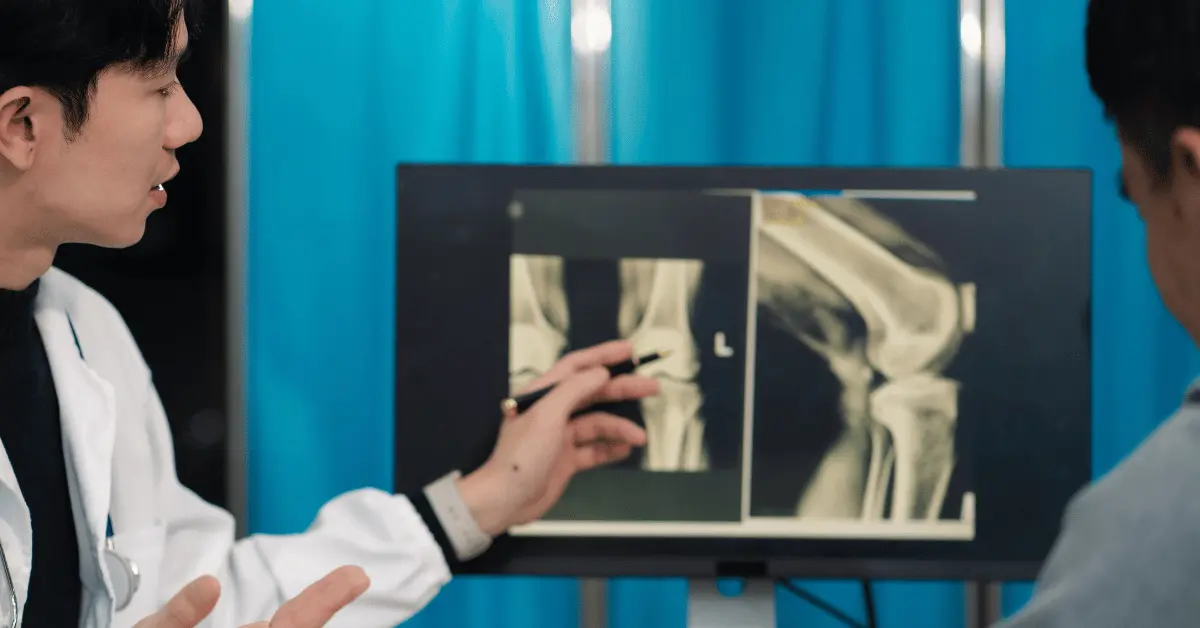
If you’ve already had an MRI and learned that surgery is a possible treatment option, your surgeon may also want to evaluate your bones. A bone density test before spine surgery is not routine for every patient, but it becomes more relevant when age, fracture history, medical history, existing imaging, or the planned procedure raises concern about osteoporosis or low bone density.
The results of the test are important since spine surgery involves more than treating the painful or damaged part of the spine. Bone health affects how well instrumentation holds, how bone heals after a fusion procedure, and the types of surgical complications a surgeon needs to consider.
Why Does Bone Density Matter Before Spine Surgery?
Spinal fusion surgery depends on stable fixation and new bone growth between the treated vertebrae. Bone density affects both parts of that process. Stronger bone gives the screws and rods used to stabilize the spine a more secure hold, while low bone mineral density is associated with problems such as screw loosening and shifting of the devices used to support the spine. Poor bone health can also make it harder for the vertebrae to form a solid fusion, increasing the risk of pseudarthrosis, which occurs when the bones do not fully fuse as intended.
Low bone density does not mean spinal fusion will fail or that surgery is no longer an option. It gives the spine surgeon information that may affect how the procedure is planned and whether bone health needs attention before surgery.
For patients with osteoporosis or osteopenia, bone strength may influence:
- How securely screws and rods hold in the vertebrae
- The risk of fractures in weakened bone around the surgical area
- Bone growth and healing after fusion
- Whether the surgical approach needs to be adjusted
These factors become especially relevant when a procedure places greater stress on the bones of the spine.
Who Needs a Bone Density Test Before Spine Surgery?
A surgeon usually considers osteoporosis screening when a patient’s risk factors suggest low bone density or when the planned operation depends heavily on bone strength.
A surgeon may recommend osteoporosis screening when a patient’s history or planned procedure raises concern about low bone density.
The Congress of Neurological Surgeons’ preoperative osteoporosis guideline recommends evaluating bone health when osteoporosis is suspected before certain spine surgeries. Factors that may prompt closer evaluation include:
- A previous diagnosis of osteoporosis or osteopenia
- A prior vertebral fracture or other low-trauma fracture
- Compression fractures visible on previous imaging
- Medical conditions or prescription medications associated with bone loss
- Previous spine surgery complicated by screw loosening or failure of the bones to fuse
- Age and other risk factors associated with reduced bone strength
Osteoporosis often causes no noticeable symptoms before a fracture occurs. Some patients first learn that they have low bone density after imaging or testing performed as part of their surgical evaluation.
The surgeon uses the patient’s fracture history, medical history, medications, existing imaging, and planned procedure to decide whether additional bone density testing is appropriate.
How Is Bone Health Evaluated Before Spine Surgery?
The most common test is a DEXA scan, a low-dose X-ray that measures bone mineral density. This scan produces a T-score that compares a patient’s bone density with that of a healthy young adult.
A lower T-score indicates greater bone loss, and a T-score of -2.5 or lower indicates osteoporosis. The result gives the surgeon a clearer measure of bone strength before a procedure that relies on the vertebrae to support screws or other surgical devices.
DEXA results are considered alongside information such as:
- The condition affecting the spine
- The type and length of the planned operation
- Previous fractures
- Spinal alignment and stability
- Other medical conditions that affect treatment
CT imaging may also provide information about bone density, and vitamin D testing may be appropriate in some patients. Together, these findings can identify bone-health concerns that need to be considered before surgery and guide the surgeon’s preoperative planning.
Can a CT Scan Also Show Low Bone Density?
A CT scan can also give the surgeon useful information about bone strength because measurements taken from the scan can show whether the vertebrae appear less dense than expected. This can be especially useful when a patient already has a CT scan as part of the spine evaluation or when changes in the spine make a DEXA scan harder to interpret.
A CT scan does not replace a DEXA scan in every case, so the surgeon uses the available imaging, medical history, and planned procedure to decide whether additional bone density testing is needed.
Blood testing can also form part of the evaluation. For example, vitamin D deficiency can contribute to poor bone health, so a physician may check vitamin D levels when the patient’s history or planned spinal surgery warrants it.
How Do Osteoporosis and Low Bone Density Affect Spinal Surgery?
Patients with osteoporosis do not automatically lose the option of surgery. Instead, osteoporosis changes the questions a surgeon asks before recommending a procedure. The surgeon needs to consider whether weakened bones will hold fixation adequately, whether fracture risk is elevated, and whether poor bone density affects the expected bone growth needed for fusion.
The mechanical demands also differ from one operation to another. A short fusion for a degenerative condition places different demands on the spine than a longer reconstruction.
When low bone density affects the proposed surgery, the treatment plan may involve:
- Coordinating osteoporosis treatment with the physician managing the patient’s bone health
- Allowing time for preoperative treatment when an elective operation does not need to proceed immediately
- Modifying the fixation strategy
- Considering methods that improve screw purchase in weak bone
In selected osteoporotic patients, surgeons use cement-augmented screws to increase fixation strength. This technique carries its own potential risks, so the decision depends on the patient’s anatomy and operation.
Patients should not start, stop, or change osteoporosis treatment, vitamin D, calcium, or prescription medications based on general information online. A physician needs to determine whether treatment to improve bone density is appropriate and how it fits with the timing of surgery.
Does Osteoporosis Increase the Risk of Complications After Fusion?
Low bone mineral density is associated with a higher risk of several complications after spinal fusion, including screw loosening, implant movement, new fractures, and problems with the bones fully fusing as intended. Poor bone density can also increase the risk of fractures in the vertebrae next to a fused area because those bones continue to absorb stress during movement and recovery.
For larger spinal reconstructions, surgeons may also consider the risk of proximal junctional kyphosis, a change in alignment that can develop near the top of a spinal fusion. Osteoporosis is one of the factors that may increase this risk.
These complications do not occur in every patient with osteoporosis. Screening before surgery gives the surgeon a better understanding of bone strength and any risks that need to be considered when planning treatment.
Does Low Bone Density Mean Surgery Has to Wait?
Sometimes low bone density changes the timing of elective surgery. The answer depends on the severity of the bone loss, fracture history, urgency of the spine condition, planned operation, and other medical risk factors.
When surgery can safely wait and poor bone health raises concern about fixation or bone healing, the medical team may recommend improving bone health first. Treatment intended to improve bone density takes time, and no single preoperative treatment period applies to every patient.
The same principle applies to patients considering different surgical options. Someone comparing artificial disc replacement and fusion needs an evaluation of the discs, facet joints, spinal alignment, stability, and bone strength before the surgeon recommends one procedure over another.
For patients who are candidates for minimally invasive spinal fusion, smaller incisions and reduced disruption to surrounding tissue do not remove the need for healthy bone formation. The fusion still depends on stable fixation and biological healing.
Optimizing Bone Health Before Spine Surgery
Optimizing bone health does not mean every patient needs medication or a long delay before surgery.
For some people, the evaluation simply confirms that bone density does not create an additional concern. For others, identifying osteopenia, osteoporosis, vitamin D deficiency, or elevated fracture risk gives the medical team time to address a problem before an elective operation.
Improving bone health also requires individualized medical guidance. The approach depends on the cause of bone loss, the patient’s overall health, previous fractures, current treatment, and the proposed operation.
This is particularly important because a spine surgeon and the clinician treating osteoporosis may address different parts of the same problem. Working closely across those areas of care allows the surgical plan and bone-health treatment to account for each other.
How Bone Density Affects Spine Surgery Planning
A bone density test before spine surgery can show whether low bone density or osteoporosis needs to be considered when planning the procedure.
For some patients, the answer is no. For others, low bone density, osteoporosis, fracture risk, or poor bone health influences the surgical technique, timing, or medical preparation before treatment.
Dr. Gerald Alexander evaluates more than an MRI when determining spine surgery candidacy. Symptoms, physical findings, spinal stability, alignment, prior treatment, overall health, bone strength, and the planned procedure all contribute to the decision. His practice offers a range of spine treatment options for patients in Irvine and throughout Orange County.
If spinal fusion or another procedure has already been discussed, you can request an appointment to find out whether bone density testing belongs in your preoperative evaluation.
