
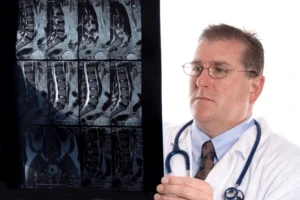
Why Patients Come to Dr. Alexander for Revision Treatment in Irvine & Orange County
Dr. Alexander has practiced orthopedic spine surgery in California since 1999. He completed his fellowship at UCLA Medical Center under two of the country’s foremost spine surgeons, and he brings that training directly to revision cases: patients who have already had surgery and still aren’t where they expected to be.
Before recommending anything, he reviews prior operative reports, current imaging, and a detailed account of your symptoms since surgery. See the full range of spine treatments available at this practice.
Dr. Gerald Alexander, MD, Irvine Office, CA
16300 Sand Canyon Ave, Suite 511
Irvine, CA 92618
Hours
Mon-Fri: 8:00 AM – 5:00 PM
Phone
714-519-2843
Spine Surgery Didn’t Work, What Now?
Failed back surgery syndrome is more common than most patients realise. It has a wide range of underlying causes that vary significantly between patients, and continued symptoms after a procedure are more common than many people expect.
Common reasons patients seek a revision consultation:
- Pseudarthrosis: a prior fusion that did not achieve solid bone union
- Adjacent segment disease: degeneration above or below a previous fusion level
- Degenerative disc disease
- Recurrent disc herniation at a previously treated level
- Spondylolisthesis
- Hardware failure, migration, or misplacement
- Incomplete decompression after a prior discectomy or laminectomy
- Epidural fibrosis: scar tissue compressing nerve structures
Symptoms that may indicate a need for evaluation:
- Back or neck pain that did not improve after surgery
- Leg or arm pain that returned after an initial period of relief
- New numbness, tingling, or weakness in the limbs
- Pain that worsened in the weeks or months after the original procedure
- Imaging showing hardware complications or adjacent segment changes
These symptoms don’t mean that you need another surgery, rather that the cause needs to be identified clearly before any treatment recommendation is made.
Spine Revision Treatment Options Dr. Alexander May Recommend
Treatment depends entirely on what the evaluation identifies. Surgical options include:
- Revision decompression for residual or recurrent nerve compression
- Revision or extension of spinal fusion for pseudarthrosis or adjacent segment disease
- Hardware revision for implant failure or malposition
- Artificial disc replacement in select cases where motion preservation is appropriate
- Failed back correction for patients whose prior surgery did not adequately address the source of pain
The surgical approach depends on what the imaging shows. Dr. Alexander uses minimally invasive techniques where possible, and for cases without a clear structural finding, non-surgical options such as injections or physical rehabilitation are the starting point.
How Dr. Alexander Evaluates Failed Back Surgery or Failed Fusion
Dr. Alexander starts each revision consultation with a thorough review of prior operative reports, imaging studies, and current symptoms. He then compares current MRI and/or CT against original pre-operative scans to assess fusion status, residual nerve compression, and hardware integrity. In select cases, he uses diagnostic nerve root blocks to isolate the pain source before making any treatment recommendations.
For patients who received a revision recommendation elsewhere and want an independent review, Dr. Alexander conducts formal second-opinion evaluations. Depending on what the imaging reveals, options such as outpatient microsurgery and minimally invasive spinal fusion may be considered.
Frequently Asked Questions About Spine Surgery
Request a Revision Spine Surgery Consultation in Irvine
If you’re still dealing with pain after spine surgery, Dr. Alexander reviews your prior procedure, current imaging, and symptoms to determine what is causing the problem and whether revision treatment should be considered.
Call (714) 519-2843 or request an appointment online to schedule a revision spine surgery consultation in Irvine.